
Beef Market Analysis | Part 3
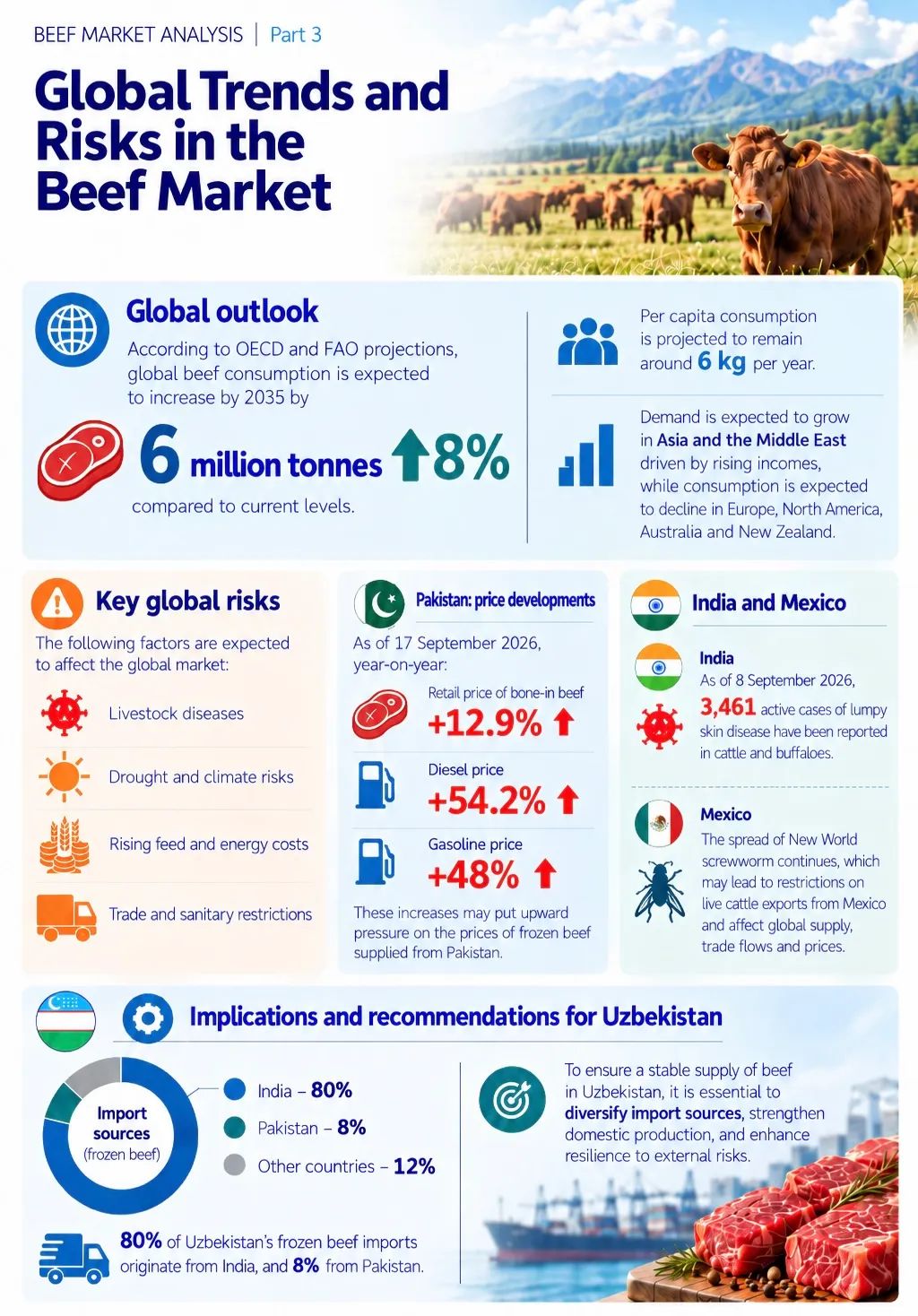
According to OECD–FAO projections, global beef consumption is expected to increase by 6 million tonnes, or 8%, by 2035. Most of this growth is expected to come from Asia and the Middle East. At the same time, limited global supply is expected to keep beef prices high in 2026. By 2035, however, real beef prices are projected to fall by 16% compared with the 2023–2025 average.
Global beef markets are being affected by animal diseases, droughts, rising feed and energy costs, and trade restrictions. As of 17 September 2026, retail prices for boneless beef in Pakistan had increased by 12.9% year-on-year. Meanwhile, diesel and petrol prices had risen by 54.2% and 48%, respectively, adding further pressure to export costs.
In India, 3,461 active cases of lumpy skin disease in cattle and buffaloes were reported as of 8 September 2026. A further spread of the disease could lead to restrictions on frozen beef exports. In Mexico, the spread of New World screwworm also poses risks to live cattle exports and international beef supplies.
Given that India accounts for 80% of Uzbekistan’s frozen beef imports and Pakistan accounts for a further 8%, diversifying import sources should be a priority for strengthening the stability of Uzbekistan’s beef supply.

