
Uzbekistan’s Pharmaceutical Industry: The Next Stage — From Quantity to Quality
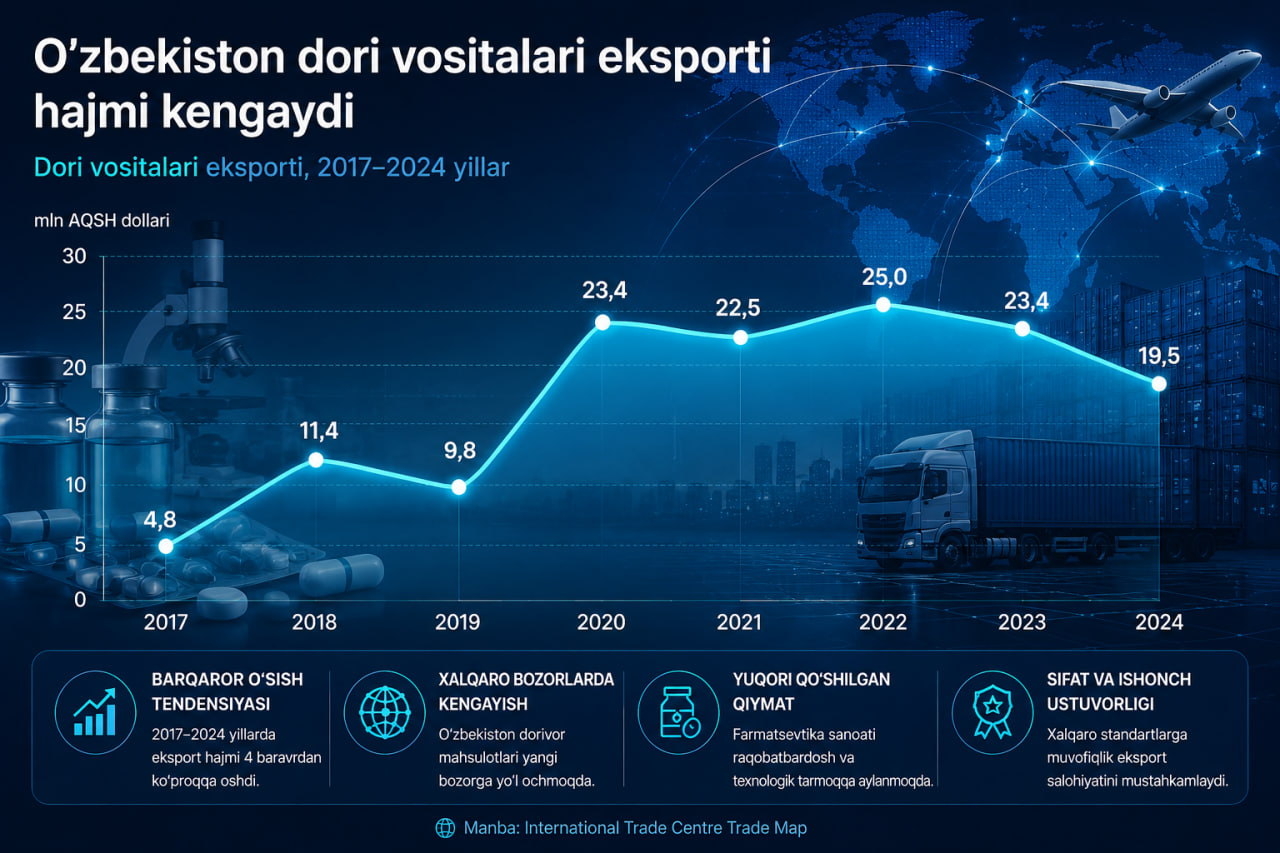
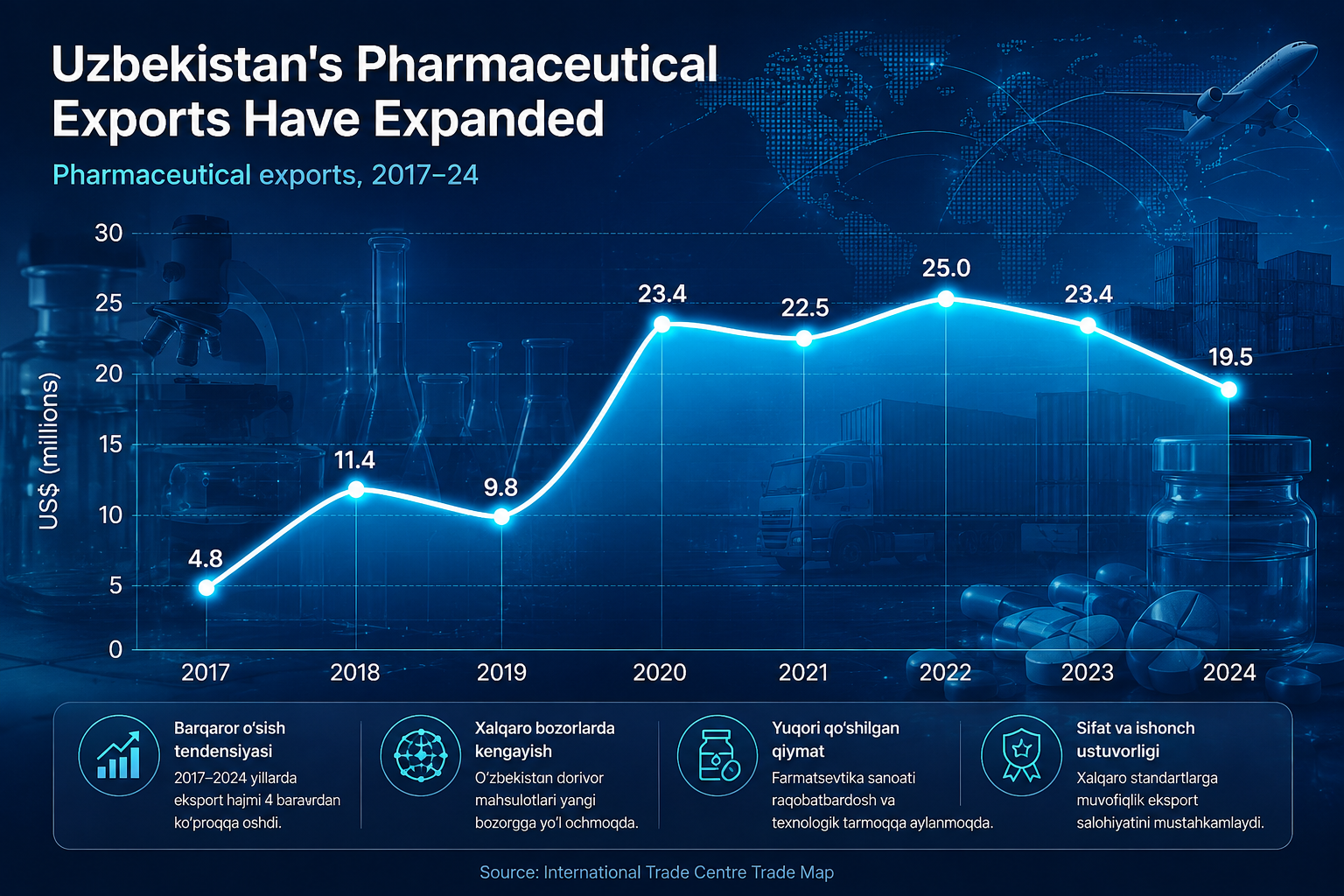
Today, more than 300 pharmaceutical enterprises operate in Uzbekistan, while over $1.8 billion in investment has been directed to the sector in recent years. However, in 2023, domestic production covered only 18 percent of domestic demand, raising an important question: how can production capacity be transformed into a genuine competitive advantage?
India’s experience demonstrates that sustainable competitiveness in the pharmaceutical industry is determined not by the number of manufacturing plants, but by integrating bioequivalence, research and development, and international certification into a unified production ecosystem.
Therefore, Uzbekistan’s next priority should be not so much to expand new production capacities as to accelerate domestic producers’ access to international markets and reduce the costs associated with entering those markets. This requires improving the registration and certification system, strengthening quality infrastructure, and expanding the production of high-value-added products.
According to World Bank estimates, such reforms could help attract up to $188 million in additional private investment and create up to 20,000 jobs.
Therefore, the next stage of the pharmaceutical industry’s development should be measured not by the growth in the number of enterprises, but by the increasing share of products that meet international standards, generate high added value, and are competitive in global markets.

