
Artificial Intelligence Is Supporting Global Economic Activity
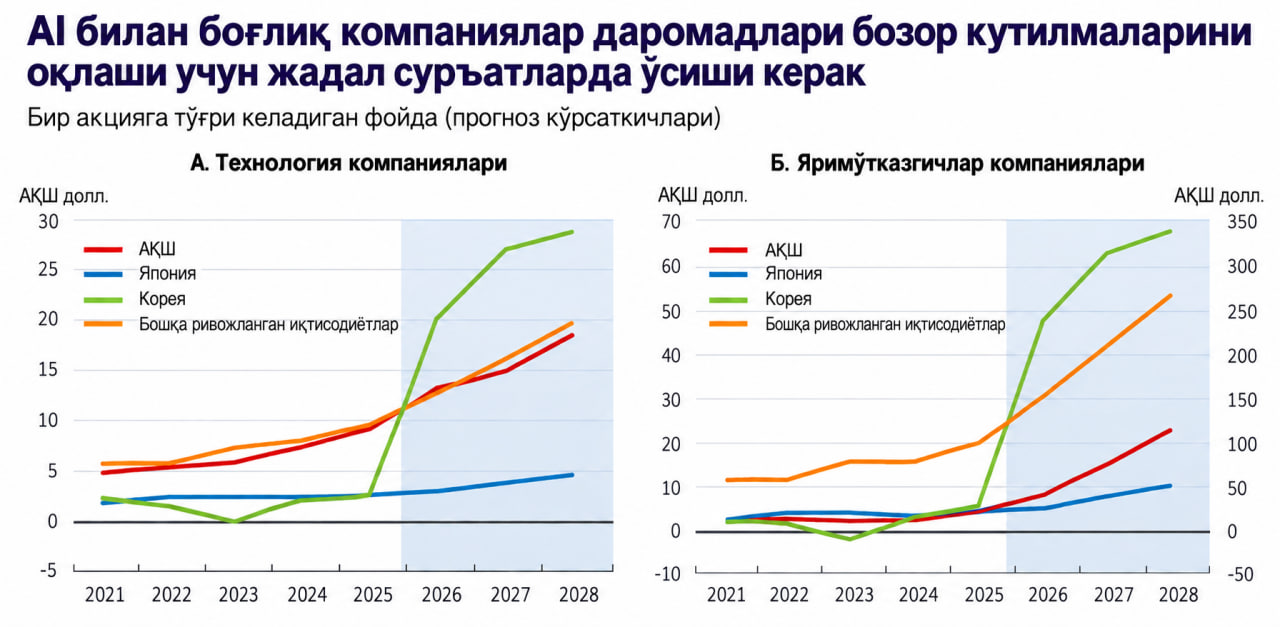
While the global economy is facing pressures such as slowing productivity growth, geopolitical fragmentation, high energy prices, and rising financial costs, investment related to artificial intelligence is supporting global economic activity. According to estimates by the International Monetary Fund, such technology investments contributed around 0.5 percentage points to U.S. GDP growth in 2025.
However, rising investment does not necessarily mean that real productivity has increased. The key question is whether businesses can use artificial intelligence to produce more goods and services with their existing labor and capital resources. According to IMF estimates, in the long term, artificial intelligence could increase the global economy’s annual potential growth by 0.1–0.8 percentage points.
At the same time, high market expectations for the earnings of AI-related companies are increasing pressure to demonstrate the future effectiveness of these investments. The World Bank notes that, for developing countries, a key opportunity lies in adapting existing technologies to local needs and integrating them effectively into the economy.
For Uzbekistan, the economic value of artificial intelligence could be reflected in higher productivity, lower costs, and the creation of new market opportunities across industry, agriculture, logistics, finance, public services, and small businesses. Achieving this requires digital infrastructure, skilled professionals, high-quality data, and reliable energy supply.

