
Logistics Costs in Global Trade: Prices, Competition, and the Resilience of Transport Corridors
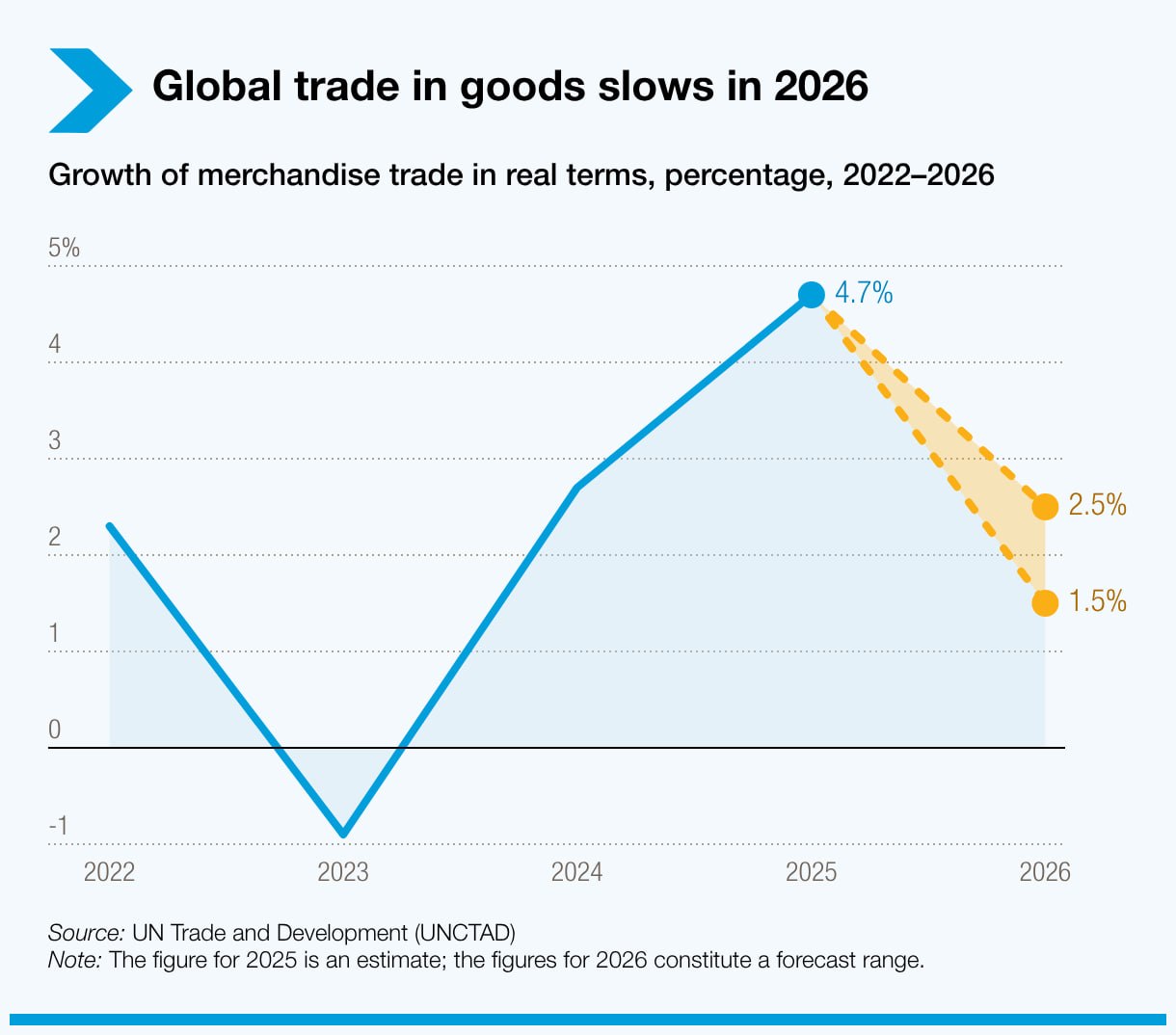
In 2026, geopolitical tensions and disruptions in the Strait of Hormuz are driving up maritime shipping, insurance, and risk-related costs, further reinforcing the strategic importance of logistics for global trade. According to UNCTAD, global merchandise trade growth is expected to slow from 4.7% in 2025 to 1.5–2.5% in 2026.
According to OECD estimates, the global average ratio of international transport and insurance costs to the value of goods (the CIF/FOB margin) stood at 4.8% in 1995–2024, rising to 5.4% during the pandemic. Changes in logistics costs affect import and consumer prices; however, a 20% increase in logistics costs does not necessarily translate into a 20% increase in final prices.
Therefore, regular monitoring of transport costs, their share in product costs, and margins along supply chains is essential. The extent to which declining logistics costs are reflected in final prices is an important indicator of competitive efficiency.
For Central Asia, key priorities include diversifying transport corridors, developing alternative supply routes, and strengthening competition in the logistics market. According to a World Bank study published in September 2026, investments in the Trans-Caspian Transport Corridor and trade and logistics reforms could, by 2040, increase trade along the corridor more than threefold, halve transportation times, and raise regional GDP by 3.3%.
An efficient logistics system and competitive transport services are important factors in ensuring market stability, reducing excessive upward pressure on product prices, and protecting consumer interests.

